
Episode 157: Safe Cooking With Disabilities


Discover how adaptive cooking tools, safe cut-resistant gear, and simple one-pot recipes empower kids with disabilities to safely build culinary independence.
The Water Prairie Chronicles Podcast airs new episodes every Friday!
Find the full directory at waterprairie.com/listen.
Show Notes:
Adaptive Tools & Kitchen Independence with Ivy Prince
Sharp knives and hot stoves don’t have to keep your child out of the kitchen—discover how simple adaptive tools unlock total culinary independence.
In this episode, host Tonya Wollum sits down with Ivy Prince, founder of Cooking Capable, live from the Disability & the Church Conference. Cooking Capable is an organization in South Carolina teaching culinary life skills to individuals with disabilities aged 3 to 73.
Ivy shares practical kitchen safety strategies, adaptive tools (like cutting gloves, slap chops, and knife guards), and simple recipe frameworks that empower children and young adults with disabilities to safely cook nutritious meals. Learn how kitchen confidence directly translates to life confidence!
Key Takeaways:
1. Focus over Distraction: Children who seem easily distracted often develop unexpected focus in the kitchen when preparing foods they love.
2. Safety Through Early Exposure: Keeping kids out of the kitchen makes cooking exponentially more dangerous as they grow older. Early, guided exposure builds lifelong safety habits.
3. Essential Adaptive Tools: Tools like Slap Chops, cut-resistant gloves, finger guards, and stabilization hold-downs allow individuals with motor or visual challenges to cut safely.
4. Simplify to Build Confidence: Start with 3-step recipes, one-pot meals, and oven cooking (which reduces burn risks from stove splatter).
🔗 LINKS & RESOURCES MENTIONED:
💻 Cooking Capable Website: https://sites.google.com/view/cookingcapable/
📧 Contact Ivy Prince / Support Cooking Capable: cooking.capable@gmail.com
🛒 Some Recommended Adaptive Tools (Amazon):
- ➡️ Slap Chop – https://amzn.to/44XnnkG
- ➡️ Cut Gloves – https://amzn.to/4yjwyt1
- ➡️ Knife Guard – https://amzn.to/4pD1WPD
- ➡️ Long Oven Mitts – https://amzn.to/4w1Epdv
- ➡️ Onion/Vegetable Holder – https://amzn.to/4vUPuge
* Ivy is still working on getting her Amazon Associates account together, and I will link her page here once it is ready to go.
(The above links are the Water Prairie links, and, as an Amazon Associate, I may earn from any purchases made after clicking these links.)
🎥 Watch Ivy’s Live Workshop Video: [I’m still editing this one! 😊]
Work with Tonya as an IEP Coach: If you’re looking for personalized support, a trusted partner, and expert guidance through the IEP process, I would be honored to be part of your team. Find more information about my IEP coaching services here: https://waterprairie.com/iepcoach
📰 Are you getting our newsletter? If not, subscribe at https://waterprairie.com/newsletter
👉 Support our podcast and help us share more incredible stories by making a donation at Buy Me A Coffee. Your contribution makes a significant impact in bringing these stories to light. Thank you for your support!
Music Used:
“LazyDay” by Audionautix is licensed under a Creative Commons Attribution 4.0 license. https://creativecommons.org/licenses/by/4.0/
Artist: http://audionautix.com/
Ivy Prince is a passionate advocate, high school student from South Carolina, and the founder of Cooking Capable—an organization dedicated to teaching essential culinary life skills to individuals with disabilities aged 3 to 73.
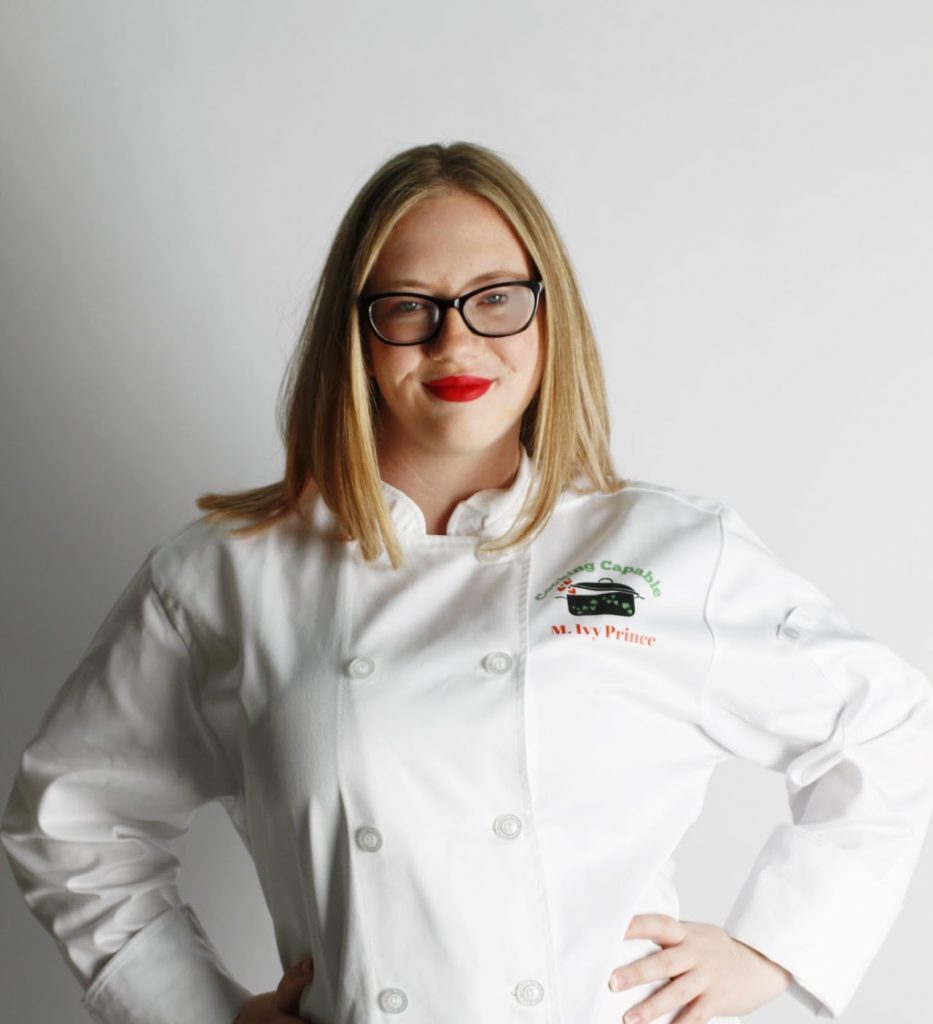
Ivy’s drive stems from a deeply personal place. Growing up alongside three siblings with diverse needs—an older sister with autism, a younger sister with Down syndrome, and a brother with learning disabilities—Ivy saw firsthand how society often underestimates the capabilities of individuals with special needs. Watching her parents encourage her siblings in the kitchen taught her that food preparation isn’t just about making meals—it’s a powerful doorway to self-reliance, motor development, and personal pride.
Through Cooking Capable, Ivy uses a hands-on, peer-to-peer approach to teach adaptive cutting techniques, kitchen safety, and simple recipe strategies. Whether working with young children, teenagers, or older adults, Ivy is on a mission to eliminate kitchen barriers and empower every participant to discover their own clear path to culinary independence.
Episode 157: Safe Cooking With Disabilities
Adaptive Tools & Kitchen Independence with Ivy Prince
(Recorded April 22, 2026)
Full Transcript of Episode 157:
Introduction: Overcoming Kitchen Barriers
Tonya: When we look at our kids with disabilities in the kitchen, we often see a wall of barriers. Sharp knives, hot stove splatter, and sensory overload. But what if the kitchen isn’t a barrier at all? What if it’s a clear path to building deep confidence, unexpected focus, and long-term independence? Today, I’m talking with Ivy Prince, the founder of Cooking Capable, to learn the simple shifts and accessible tools you can use right now to make your child truly kitchen capable.
Welcome to The Water Prairie Chronicles, the podcast for parents who have children with disabilities. I’m your host, Tonya Wollum, and I’m glad you’re here.
At the recent Disability & the Church Conference, I had the privilege of watching a live cooking workshop led by Ivy Prince. Ivy is the founder of Cooking Capable, an incredible organization based in South Carolina that teaches culinary life skills to individuals with disabilities.
Her passion comes from a very personal place, growing up with three siblings with diverse needs.
Right after her workshop, Ivy and I sat down for a quick chat to answer some of the most pressing questions parents have about kitchen safety, adaptive tools, and how to build independence at home. Let’s listen in on my conversation with Ivy
This is Ivy Prince. I just attended her cooking class demonstration here at Disability & the Church and I wanted to speak with her a little bit just to have her share more of what she’s doing and how you can learn a few things from her of what you can do with your kids.
So, just five quick questions that we have here. First of all, welcome to Water Prairie.
Ivy: Hi, I’m glad to be here.
How Learning to Cook Shows Capability in Those With Disabilities
Tonya: Ivy, you started Cooking Capable because of your siblings. So Gray, Lily, and JP are the siblings that we’re talking about.
As a sister who’s been in the kitchen with them, what’s one thing that you realized about their capability that may not be obvious to the rest of the world?
Ivy: I think, well, with each of them it’s very different. Um, different disabilities. Some are more hidden than others. With my older sister, I grew up cooking with her. She’s two years older than me. I looked up to her for everything, but especially for cooking. She was always so intelligent.
She brings so much to the table with recipes and tricks to use when I’m cooking. I think the biggest thing with her was I don’t think people realized how truly intelligent she was. People would say, “Oh, she’s shy,” or, “She doesn’t really talk.” I was like, “You have to actually have a conversation with her before you can say those things.”
Because she loves, to share about her interests and her passions. With my younger brother, I think with him is people don’t realize how focused he can be. A lot of people see him as a kid that is bouncing around, and he is. He still is that way. He’s been that way since he was born.
He’ll be bouncing around, though, in the kitchen. We put him in the kitchen, and he can stay super focused if it’s a task that he really loves or it’s a food that he wants to eat. That was something, my parents are really good at, is, getting us to learn how to cook. Their thing was, “If you cook, you get to eat what you want.”
So he would be very focused. With my little sister, she’s four years old, and it’s just how interested a four-year-old is in cooking them, because she looks up to her big siblings. I think just how interested she is and how much she wants to be a part of it, I don’t think people realize that.
Tonya: Excellent. So the rest of the questions you’re gonna know now from that answer- Mm-hmm … what her expertise is here. She’s young, but she’s coming with a, a lot of experience here. I wanted to ask a little bit about some safety things.
Practical Adaptive Tools for Kitchen Safety
Kitchens can be really scary for parents, and I know whether their child’s visually impaired or intellectually challenged with some different areas that, that they’re working on, there, there’s a lot of concerns. You’ve got heat. You’ve got knives. You’ve got literal dangers that, that every parent knows.
And they may be a little bit afraid to let their kids start working in the kitchen. What are some ways that they can adapt their kitchen for a disability that the child may be working with?
Ivy: Um, so a lot of, uh, what we use in our workshops is we use a lot of adaptive tools.
We have something called a slap chop. You can put a food inside it, um, and then all you have to do is literally slap it and it’ll dice the food. Um, we’ve done different, uh, ooh- Like others, we have knife, uh, guards. We have, uh, specifically cutting gloves. We have, um, metal pieces that you can put on your hand.
You have something that can help hold the food so your arm is up above. Um, it’s kinda hard to explain without having it to show, but we have a lot of different adaptive tools. Um, if you research on Amazon has all of those tools available. And then I think another thing is I believe it’s very important for safety, um, is to try, just try teaching.
I think, uh, um, as they get older and when they, um, start trying to be more independent, if they didn’t have someone to teach them when they were younger- Right … um, it’s going to be m- um, exponentially more dangerous as- Right … they get older. So just trying something and seeing what works.
Tonya: I will add to that, too.
Um, on her website she has a page that has the links to all of her things, and it’s an Amazon Associates page that she has. So I’m gonna put that link in the show notes so you can go to her website and see the tools that she’s talking about to get some ideas. Okay. All right, so let’s go on.
When a child finishes one of your workshops, um… And, and, and, and she w- she works with people from age three up through how old?
Ivy: 73.
How Kitchen Independence Builds Everyday Confidence
Tonya: 73, but, but we’re thinking about, about kids right now. Mm-hmm. So for parents that are listening here, so when, um, when a child finishes one of your workshops and they realize that they can actually make a nutritious meal for themselves, how does that change their confidence outside of the kitchen?
Ivy: I think, um, for a lot of our participants, ’cause we’ve had pl- um, many who come in, um, uh, either they had no experience or they, uh, one said, “That’s Mom’s job. Mom makes all the food.” Oh, yeah. Um, and by the end they were making the food, and you could just tell by the look in their eyes how happy they were that they got to create that food.
Um, I had another participant, he came up to me, the same one who said, “Mom cooks.” And he goes, “Thank you for the food.” And I turned to him, I was like, “Thank you for making the food,” and just watching the confidence light up in his eyes. He’s like- Oh, yeah … “Oh, yes. That’s right. I did that.” Um, I think it teaches, uh, when you go into something new and you go into something challenging, um, to just try.
With cooking, um, a lot of people see disability in the kitchen. They see a line in between. Mm-hmm. They see a lot of barriers. Um, with Cooking Capable, we’re trying to show them that there is a clear path.
It might look different than someone else’s clear path, but there is a clear path. So when, um, they’re trying something that isn’t necessarily kitchen related, um, that they look for that clear path for them as well.
Tonya: Nice. I like that. And, and I know our listeners can, can relate to that.
How Parents Can Start at Home
You do these workshops and clinics and all where you’re coming in and doing it. Thinking about at home, so for a parent that’s listening to this, they’re not anywhere near you, and they want to do this themselves how do they get started?
Ivy: I think, recipe-wise, I love to do three-step recipes.
Anything that, is very, simple instructions, and another thing is one-pot meals, where everything goes in the same thing. Your safest choice, I believe, is the oven. Making sure you have long enough, oven mitts, and then
there’s a lot less, worry about the food splatter when you’re working in the oven.
A lot of those type of recipes I would say are the best.
Tonya: Right. Excellent. On your website, do you have recipes?
Ivy: I do not.
I have all the recipes in a file. One of my goals one day is to be able to write a book, but I think that would be a good idea to go ahead and get them on the website.
Where to Connect with Cooking Capable
Tonya: Well, if, if our listeners want to get in touch with you, so what is your website, and how else can they get in touch with you?
Ivy: It’s Cooking Capable With Ivy.
Tonya: We’ll double-check that and put it in the show notes for you so you can find that.
Ivy: And then email is cooking.capable@gmail.com.
Tonya: Okay, so that’s easy. And we’ll put that in there, too.
So you’ll have all the links. Always, if you ever miss it, just send me a note. I’ll, I’ll pass it on for you. And, um, so now I want you to watch her demonstration. Um, it, it’ll be edited a little bit, but you’ll, you’ll be able to see her doing a workshop that, that she held today for some parents that came in, and it, it, it really was fun to wa- to watch her working but also to see the response of the parents.
What a great reminder that our kids are often capable of so much more than the world gives them credit for. Ivy’s insights on using simple three-step, one-pot recipes and the safety of oven cooking are excellent starting points for any parent wanting to open up the kitchen to their child. If you want to check out the adaptive tools Ivy mentioned, like the SlapChop, knife guards, or cutting gloves, I’ve linked her Amazon Associates page in the show notes, along with her website and direct email.
How to Support Cooking Capable’s Mission
As many of you know, funding is shifting for grassroots organizations like Cooking Capable, and their current grants are wrapping up this year.If you run a church ministry, a community group, or if you’re a donor looking to back a project making a tangible, everyday difference in the disability community, please reach out to Ivy.
Let’s help her keep these vital programs fully funded. And make sure you check out my video from directly inside the Disability & the Church Conference. I recorded part of Ivy’s live workshop so you can see these adaptive tools and strategies in action, and I put the link in the show notes for you.
Have a great week, and I’ll see you next time
FAQ (Frequently Asked Questions):
Q1. How can I safely teach my child with disabilities to use a knife?
A1. You can start by using adaptive safety equipment such as cut-resistant gloves, metal finger guards, or alternative dicing tools like a Slap Chop that eliminate contact with exposed blades.
Q2. What are the safest cooking methods for kids with fine motor delays?
A2. Oven baking in combination with long oven mitts is often safer than stovetop cooking because it eliminates hot grease splatters and reduces active handling over high heat.
Q3. How do I keep my child from getting overwhelmed in the kitchen?
A3. Begin with simple 3-step recipes or one-pot meals. Breaking cooking down into concise, predictable steps keeps sensory input manageable and prevents frustration.
Q4. At what age can children with special needs start learning kitchen skills?
A4. Children as young as 3 years old can begin participating in simple, safe kitchen tasks alongside family members to build interest, familiarity, and fine motor control.
Q5. How does learning to cook help a child beyond the kitchen?
A5. Mastering a tangible life skill like cooking creates a boost in self-esteem. When children realize they can overcome a challenging task, they approach non-kitchen obstacles with greater confidence.
Q6. Where can I find adaptive cooking utensils for my child?
A6. Many effective adaptive kitchen tools—including specialty cutters, safe guards, and weighted utensils—are readily available on online marketplaces like Amazon under adaptive kitchen supplies.
