
Episode #146: Proximity is Not a Program: Moving from Inclusion to Belonging


Does your child spend their day in the general education classroom, but you suspect they aren't truly included? In this episode of Water Prairie Chronicles, we are unpacking the dangerous myth that "proximity is a program." Just because a student is physically in the room doesn't mean they belong. Join me as we break down the difference between mainstreaming and true inclusion, explore the transformative power of a sensory audit, and learn how to write IEP goals that prioritize social connection over mere compliance. Let’s help your child find their place on the dance floor.
The Water Prairie Chronicles Podcast airs new episodes every Friday!
Find the full directory at waterprairie.com/listen.
Show Notes:
Being in the room isn’t the same as being part of the class. It’s time to move from proximity to true belonging.
Stop walking into IEP meetings feeling like a guest. Discover how to move your child from the “desk in the back” to a place of true belonging in the classroom.
In this episode, IEP Coach Tonya Wollum breaks down the crucial difference between mainstreaming and true inclusion. Using powerful personal stories and expert insights, she explains why physical presence is only the first step toward your child’s success.
What is the difference between Mainstreaming and True Inclusion?
There is a powerful saying in the advocacy world: “Proximity is not a program.” It means just because your child is within ten feet of their non-disabled peers doesn’t mean they are being included.
True inclusion isn’t just about where the desk is; it’s about whether the school has changed the “box” to fit your child. This is the difference between Mainstreaming—where we expect the child to keep up with the class—and True Inclusion, where the supports are brought directly to your child so they can participate meaningfully.
Inclusion strategist Vernā Myers has a beautiful way of putting this: “Diversity is being invited to the party; inclusion is being asked to dance.” As an IEP coach, I take that a step further: Belonging is knowing all the songs.
How can a Sensory Audit help my child succeed in the classroom?
Often, the barrier to inclusion isn’t a child’s disability—it’s the environment. Sometimes, a child “fails” inclusion because the room is physically overwhelming.
If you’re considering if the general education classroom is a good fit, consider asking your IEP team for a Sensory Audit. This concept is supported by organizations like InclusionED. It’s a simple process of asking: Is the buzzing of the fluorescent lights or the cluttered walls making it impossible for your child to focus?
When we identify these triggers, we move from “managing a behavior” to “supporting a student.” Whether it’s requesting glare-reduction for a child with a visual impairment or allowing a hat for a student sensitive to skylights, these environmental changes are key to belonging.
How do I write IEP goals that focus on social connection and belonging?
Are your child’s IEP goals all about compliance, or are they about connection? Instead of a goal that simply says “Student will sit quietly,” look for goals like: “During recess, the student will initiate a shared activity with a peer.” We can actually write Social Connection into the IEP. If you’re feeling overwhelmed, you can download my Free IEP Meeting Checklist with 15 Must-Ask Questions to help you walk into that room feeling like the CEO of your child’s education.
Resources Mentioned in This Episode
- Free Strategy Session: Book a call with your IEP Coach
- Free Download: IEP Meeting Checklist: 15 Must-Ask Questions
- Expert Insight: Vernā Myers on Diversity and Inclusion
- Understanding Rights: Inclusion vs. Mainstreaming Guide
- Environmental Support: InclusionED Sensory Audit Guide
- Goal Examples:A Day in Our Shoes – Social-Emotional IEP Goals
Work with Tonya as an IEP Coach: If you’re looking for personalized support, a trusted partner, and expert guidance through the IEP process, I would be honored to be part of your team. Find more information about my IEP coaching services here: https://waterprairie.com/iepcoach
📰 Are you getting our newsletter? If not, subscribe at https://waterprairie.com/newsletter
👉 Support our podcast and help us share more incredible stories by making a donation at Buy Me A Coffee. Your contribution makes a significant impact in bringing these stories to light. Thank you for your support!
Music Used:
“LazyDay” by Audionautix is licensed under a Creative Commons Attribution 4.0 license. https://creativecommons.org/licenses/by/4.0/
Artist: http://audionautix.com/
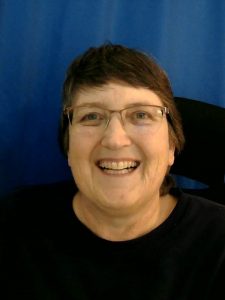
Tonya Wollum is an IEP Coach, podcast host, and disability advocate. She works one-on-one with parents to guide them to a peaceful partnership with their child’s IEP team, and she provides virtual mentors for special needs parents through the interviews she presents as the host of the Water Prairie Chronicles podcast. Tonya knows firsthand how difficult it is to know how to support your special needs child, and she seeks to provide knowledge to parents and caregivers as well as to those who support a family living life with a disability. She’s doing her part to help create a more inclusive world where we can celebrate what makes each person unique!
Episode #146: Proximity is Not a Program: Moving from Inclusion to Belonging
Being in the room isn’t the same as being part of the class. It’s time to move from proximity to true belonging.
(Recorded February 24, 2026)

Full Transcript of Episode 146:
Hi everyone, welcome to the Water Prairie Chronicles, a podcast created to support parents who have children with disabilities. I’m your host, Tonya Wollum, and I’m glad you’re here. If you’re a parent navigating the world of special education, I know how heavy that can feel. Today, I want to talk about a phrase I often have parents tell me: ‘My child is in the general education classroom.’
Usually, a parent tells me this with a mixture of pride and relief, and it’s usually after their child has spent time in a special education class and has been graduated to spending time in the general education classroom with their same-age peers. It may be for part of the day, or it may be for the full day. Sometimes it’s said by a parent whose child has always been assigned to the general education classroom from the start. But then, in either case, as we dig deeper, we realize that while their child is physically in the room, they are sitting in a separate desk in the back with a 1-to-1 aide or para professional, doing a completely different activity than their peers. Friends, we need to talk about why this is not what you might think.
What is the difference between Mainstreaming and True Inclusion?
There is a powerful saying in the advocacy world: ‘Proximity is not a program.’ It means just because your child is within ten feet of their non-disabled peers doesn’t mean they are being included.
True inclusion isn’t just about where the desk is; it’s about whether the school has changed the ‘box’ to fit your child. This is the difference between Mainstreaming—where we expect the child to keep up with the class—and True Inclusion, where the supports are brought directly to your child so they can participate meaningfully.
Inclusion strategist Vernā Myers has a beautiful way of putting this. I love this quote. She’s famous for saying, ‘Diversity is being invited to the party; inclusion is being asked to dance.’ As your IEP coach, I want to take that a step further for you: Belonging is knowing all the songs. I want your child to not just be ‘at the party’ of their classroom—I want them to feel like they belong there.
How can a Sensory Audit help my child succeed in the classroom?
So, how do we move toward belonging? Often, the barrier isn’t your child’s disability—it’s the environment they are placed in. Sometimes, a child ‘fails’ inclusion because the room is physically overwhelming.
If you’re considering whether the general education classroom is a good fit for your child, I want you to consider asking your IEP team for a Sensory Audit. This is a concept supported by organizations like InclusionED, and I’ll put the links for these in the show notes for you. It’s a simple process of asking: Is the buzzing of the fluorescent lights or the cluttered walls making it impossible for your child to focus on the lesson? When we identify these triggers, we move from ‘managing a behavior’ to ‘supporting a student.’ My family had to work through this for my daughter all through school because she is visually impaired. Sometimes you may find requesting a Sensory Audit is helpful for other reasons. For example, when my son was transitioning to middle school, he was very sensitive to bright lights, and his classrooms all had skylights that caused a bright glare during the middle of the day. His IEP team added an unusual accommodation for a child who didn’t have a visual impairment; he was allowed to wear a hat or sunglasses if the glare was too much for him. It was simple, but it fixed the problem.
How do I write IEP goals that focus on social connection and belonging?
We also need to look at the goals in that IEP. Are they all about compliance? Or are they about connection? Instead of a goal that simply says ‘Student will sit quietly,’ let’s look for goals like: ‘During recess, the student will initiate a shared activity with a peer.’ We can actually write ‘Social Connection’ into the IEP.
I know this is a lot. If you’re sitting there thinking, ‘I know my child deserves more, but I don’t know how to ask for it,’ I want you to know you don’t have to do this alone. This is exactly what I do as an IEP Coach. I help you turn ‘proximity’ into ‘belonging.’
If you’d like to sit down and look at your child’s specific situation, I’d love to offer you a Free Strategy Session. We can talk about your top concerns and start building a roadmap for you. Just head over to waterprairie.com/iepcoach to sign up. Let’s get your child ‘on the dance floor’ together.
And if you’re feeling overwhelmed by the thought of going into your child’s next IEP meeting, I have a resource to help. You can download my Free IEP Meeting Checklist with 15 Must-Ask Questions to help you walk into that room feeling like the CEO of your child’s education. You can find that at https://waterprairie.com/iepmeetingchecklist/
Next week on the podcast, we are taking this conversation a little bit further. We’ve talked about belonging in the classroom today, but what about our communities of faith? I’ll be joined by a special guest, John Fela, to discuss inclusion in the church.
Have a great week, and I’ll see you next time!
Frequently Asked Questions (FAQ)
- What is a Sensory Audit in an IEP? A Sensory Audit is an assessment of the classroom environment to identify sights, sounds, or layouts that might be hindering a student’s ability to learn or regulate.
- Is proximity the same as inclusion? No. Proximity is simply physical presence. Inclusion requires intentional supports that allow the student to engage in the same activities as their peers.
- Can social skills be part of an IEP? Yes. Social-emotional goals can and should be included if a child needs support to build connections or self-advocate within the school community.
- What does “Proximity is not a program” mean in special education? It refers to the idea that simply placing a student with a disability in a general education classroom is not enough; they must be provided with active supports and modifications to participate.
- How is inclusion different from mainstreaming? Mainstreaming often requires the student to adapt to the existing curriculum, while true inclusion adapts the environment and instruction to fit the student’s needs.
- Can I request a sensory audit for my child’s classroom? Yes. You can request that the IEP team or an Occupational Therapist conduct a sensory audit to identify environmental barriers to your child’s learning.
- What are social-emotional goals in an IEP? These are goals that focus on building relationships, self-regulation, and self-advocacy rather than just academic or behavioral compliance.
